Wednesday, January 9, 2013

Jam to-day


 Jam to-day


Recently I listened to an On Being segment interviewing Rex Jung, a neuropsychologist and creativity researcher, in which he discusses, among other things,  transient hyperfrontality, that brain state in which we are most apt to make connections between the seemingly unrelated to innovative effect. He had a useful metaphor for this brain state, comparing our usual brain function to a super highway, and transient hyperfrontality or, the down regulation of the frontal lobes, to the back roads, or even the dirt roads, where our minds wander freely. This is not knowledge acquisition, but rather a kind of deep, undirected processing that creates something new and useful (which, for many neuropsychologists, is the working definition of creativity). We all have our own ways of getting there, he notes: walking, yoga, napping, driving, rearranging the paperclips on our desk. 

I wrote a poem about it once

Tennyson Walked

In the bizarre rituals of the batter
I see the writer at her early morning desk
Herding the paper clips,
Aligning the research stacks, just so

To create a path perhaps, a sight line,
A semblance of a clear-cut open path.

Virginia Woolf cleaned the house first,
Tennyson walked.

A rite of order and approach that,
On more than one occasion
Allowed them to hit it out of the park.


Anyone immersed in the novel writing process, particularly the research/exploration end of novel writing, is familiar with the strange, out-of-time, connectivity that seems to arise from this kind of creative work. Associations multiply. Dramatic coincidences abound. Jung called it synchronicity, temporally coincident occurances of acausal events.  It is an odd state, where unrelated events or circumstances become meaningful and often symbolic. For the writer deeply engaged with theme and storyline, its a familiar sensation; the roots and branches of research are endless, and significant connections grow and multiply.  

This is the way the writers brain works, by association, and it was with great relief that I came to realize that what I considered my scattered, undisciplined, illogical processing was, in fact, a boon to the artist, a state of mind to be prized and cultivated. We are all our own libraries, after all, our psychological and emotional and intellectual shelves stacked high from birth, in our own quirky systems, with all we hold meaningful.

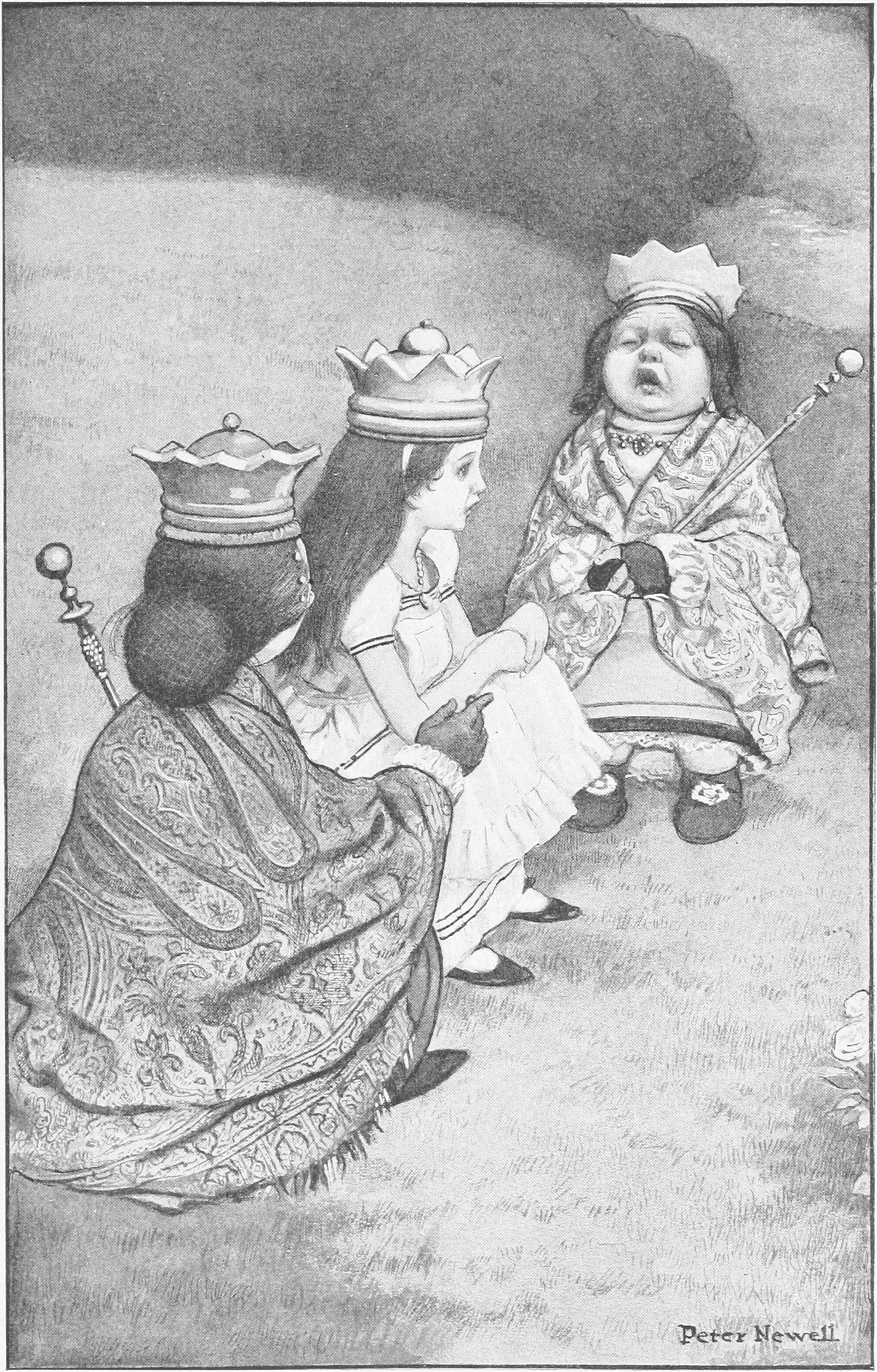
'The rule is, jam tomorrow and jam yesterday--but never jam to-day.
'
'It MUST come sometimes to "jam to-day,"' Alice objected.

'No, it can't,' said the Queen. 'It's jam every OTHER day: to-day isn't any OTHER day, you know.
'
'I don't understand you,' said Alice. 'It's dreadfully confusing!'
'
‘That's the effect of living backwards,' the Queen said kindly: 'it always makes one a little giddy at first—
'
'Living backwards!' Alice repeated in great astonishment. 'I never heard of such a thing!'
'
--but there's one great advantage in it, that one's memory works both ways.
'
'I'm sure MINE only works one way,' Alice remarked. 'I can't remember things before they happen.
'
'It's a poor sort of memory that only works backwards,' the Queen remarked.

                                                                                          Lewis Carrol, Through The Looking Glass

Saturday, December 15, 2012

Local Pioneer


Not long ago, I had a visit from Taylor Resteghini from the Pioneer Charter School of Science in Everett, MA.  Taylor is in her final year at PCSS, and is working on her senior project, which combines her interests in cross cultural connections, children's literature, and art. Recently Taylor completed another People to People program, which took her to South Africa as a "student ambassador" to interact with her peers there and experience the local customs.  As every writer and artist knows, traveling is always fertile territory for the imagination, and so it was for Taylor, whose experience of the the people, places, and cultures  of South Africa inspired an idea for a picture book comparing the lives of children in the in the townships, to the lives of American children.  Taylor is an artist as well as a storyteller, and plans to illustrate her text with pencil drawings. She has promised me an illustration from her project soon, if only she can take time away from those college applications and school visits!  Good luck, Taylor, and we look forward to seeing the final project!


Wednesday, October 24, 2012

Craft 101

This morning I drove in to town before the sun was up to put my mother on the plane home to northern Florida.  She had made the trip, despite age and vision problems, to attend the BPL's Writer-in-Residence reception last Wednesday. The evening reception honored the wonderfully talented outgoing Writer-in-Residence, Sarah Winifred Searle, for her work on the graphic novel, Under The Apple Tree, a mystery set in small town Maine during World War II.  Sarah talked about her writing process, showed slides of her amazing artwork, and discussed her beloved Kenebunk and the local history which inspired her story. Sarah described her time as WIR as, "pretty much the best year of her life," and it was clear from her work that not a moment of time was wasted as she labored on her story and artwork. Sarah also held workshops at various branch libraries, which were a thrill for both teacher and students, and provided the WIR office with some pretty terrific artwork to boot!  To see some of Sarah's work, and find out what she is up to now, visit her website at http://www.swinsea.com/ .

The reception was also a lovely welcome for me, and chance to read a bit from the work in progress, Saved, surrounded by the grand murals of the Abbey Room and my family and friends (old and new). I was able to thank the Associates not only for the gifts they've given me, of time (every writer's dream), of space (my beautiful office beyond the swinging doors and this amazing building full of treasures), and of support (financial and spiritual). But also for the message the program sends to the wider world about the importance of children's literature and the work we do as writer's for children.

In true Oscar Night fashion, I had a few other thank you's as well.  Especially for my mentors, the wonderful writers, Liza Ketchum, and our dear, dear Ellen Levine, friend and advocate extraordinare, whom we just lost this past spring. The gifts they've given are too many to count.

 And there was one other to thank...

My first stories were from my mother.  She was a nursery school and kindegarted teacher for many years, first in her own school, in the the little town of Bridport, Vermont (where my first novel, The Curve of The World, is set), and then at the Brook School, in Concord, Mass, where I grew up. She made books come alive for all of us, but my favorite stories were those she created herself; "The Holly Stories," about a very tiny, elf-like girl, who is found in the woods and adopted by a large, noisy family not unlike our own.  Of course she gets into all kinds of trouble, falling into the cake batter and dodging cats, that sort of thing. But she has her own dollhouse to live in. And she saves herself and the day more than once. I was entranced by that Holly; the brave one who has many adventures and overcomes many obstacles, despite her poor impulse control and very diminutive size.

From that Holly, and the woman who created her, I learned that good stories (like life) are about overcoming obstacles, or at least coming face to face with them.

For that, my first craft lesson, I thank you, Mom.  


Thursday, October 4, 2012

Bright Lights


On Sunday, the Associates of the BPL hosted their annual Literary Lights for Children event honoring four outstanding authors in the field of Children’s Literature. This year, the honorees were Gary Schmidt, Kevin Hawkes, Christopher Paolini, and Mitali Perkins. The Bates Reading Room, upstairs at the BPL was transformed into a resplendent dining room, not unlike  the great room at Hogwarts at Christmas, complete with dragons, and white table clothes, and mysteriously replenished delicacies. Gregory McGuire was the warm and welcoming master-of-ceremonies, and the authors were all those things you would expect from such talented writers and artists; witty, thoughtful, and inspiring, a delight to children and adults alike. Gary Schmidt took us by the hand, and walked us through his writing day, his very sensible Yorkies scrambling around his feet. Mitali Perkins reminded us that the readers job is just as important as the writer’s in creating story. Christopher Paolini showed us that what we are most passionate about usually makes the best stories (and, hey, writing is better than digging holes in the backyard anyhow). And Kevin Hawkes explained how and why the landscapes of his childhood are still his favorite places to visit for inspiration. (He also wowed us by sketching on the spot; a wizard-like face, with a bit of glare and a chicken for a hat.)
I don’t think these authors would mind me saying, however, that the real stars of the afternoon were the four presenters; the four Boston area school children chosen to present the authors with their awards. I was humbled, in awe, of these middle schoolers who stood up before nearly 400 people to talk about their favorite authors and their work. More than one wanted to become writers themselves, and all were passionate readers who talked about the value of story in their own real time, real life worlds. It was a magical afternoon and a reminder of why we writers spend our time and lives stumbling around in the world of story in first place; for the lantern raised over the top of the hill, for the fellow traveler well met, for the connection. 
 Bright lights indeed. 

Monday, September 17, 2012

Sound is the Freedom


There is moment in the the beginning of Andrew Zuckerman’s documentary, Music, in which Iggy Pop, Clint Black, Dizzee Rascal, and Eve, to name a few, search for a definition music; a thoughtful, telling moment, wherein the essential mystery of the art form is perfectly exposed. Words, after all, are a pitiful substitute for the musical experience, which, as  these artists describe it, bypasses the intellect and directly addresses the soul. The mystical, in the creation, performance, and enjoyment of music is a theme returned to again and again in this film.  The artists refer to themselves variously, as conduits, translators, channels. Itzhak Perlman argues that at some point, the musician should stop playing his instrument (because, of course, we can all play), and start talking the music. The idea that the music is something beyond the composer, performer, and audience; a nexus of connections (to use John Williams’s phrase), goes a long way toward explaining the musical transaction, and acknowledges the role of the listener in its more expansive, protean qualities. As Ornette Coleman tells us, “Sound is the freedom; it’s you that change the music.”

Wednesday, September 12, 2012

Room 419


Room 419 in the Boston Public Library is a small, paneled, ornamented space, just off the wondrous Abbey Room, (beyond the swinging doors), on the second floor of the McKim building.  The room has had many uses since its construction in 1895. It once housed the core of the library’s manuscript collection, known as the Chamberlain Autograph Collection, containing such historical gems as the letters of Dorothea Dix, John Hancock, and one William Dyer, who, poor man, begs  for the life of his wife, on trial for witchcraft in Salem. The room has served as a lobby. It has served as an office for secretaries and assistants. But its most recent function may be its most progressive; providing a “room of one’s own,” to an emerging writer of children’s literature. For the past eight years, the Associates of the Boston Public Library has offered this nine-month, Writer-in-Residence fellowship, which provides a generous stipend and a quiet oasis in the heart of one the world’s great libraries. The Associates underwrites many programs in service of the BPL and its community, including Literary Lights, Literary Lights for Children, a retroactive, 100 year National Book Award, and many other noteworthy exhibitions, musical performances, readings, and curatorial events. The heart of the Associates, however, is its mission to conserve and promote the inestimable treasures of the BPL’s special collections. (Just last week, I stood this close to a recently restored book once held in the hands of Benjamin Franklin, and did you know that the library of John Adams resides here?) This important work is devoted to connecting writers and readers across time.
     With the gift of room 419, the work continues.