Friday, April 5, 2013

The World Is A Book


You know the debate, the perennial internal argument the writer has about process; the when, where, and how of it all. Hypnagogia versus nine-to-five versus the dead of night.  At home in sweats or dressed for the office.  A strict two hours daily (more or less) or when the mood strikes.  These are the mechanics of the writer's day, and, so the argument goes, the sooner we establish our own, best work habit, the sooner we can get on with it. By that logic, discovering what best serves the muse is essential, the foundation on which our creative house rests. But is the writer forever in the same place  psychologically, emotionally, physically?

As an aforementioned, rolling-out-of-bed, writing-in-sweats type, working in the city was never on my radar, so I've been alert to the effects of commuting on mood, inspiration, organziation, and productivity; all the elements, psychological and pragmatic, that contribute to what Mihaly Csikszentmihalyi calls flow.  And all I can say is that somehow, for me, the daily journey, by car, train, and foot, has become symbolic of the larger journey. Making that physical transition from home-place to work-place serves as a kind of pyschological bridge; one of those thresholds that clearly mark the passage from the external, everyday, practical world, to the internal, out-of-time, imaginative world, where the writer spends her days.

Art is exploration, after all.

Also, there are the swans. The pair that spend languid mornings between the pump house and the wooded shore, unfazed, apparently, by the passing rail traffic. There is also the bluebird, feeding, of all places, at the base of the chain link fence on the outbound side of the Southboro station. He is early, and alone, and goes from fence, to ground, to fence again, in a flash of cornflower blue, almost unatural in its intensity against the dirty, late spring snow. Then there are the Valentine's Day commuters, who, along with the ususal briefcases, laptops, and pocketbooks, are overburdened with the expressionThe love train.
of their affections, cellophaned bouquets and heart shaped boxes of chocolate.

Commute is from the Latin, commutare, "to change often, to change altogether," and in all its multiple meanings there is always this root of transposition, of metamorphosis. On the long ride to and from I think of this, and all the ways the journey itself helps keeps the creative well from running dry. The world is a book, says St. Augustine, and those who do not travel read only one page.

Tuesday, March 5, 2013

Old Friends


One of the many benefits of having an office at the BPL is the opportunity to spend time with old friends.  I give myself time each week for a good, old fashioned visit with some of my best loved authors and illustrators, a sure way to stay inspired and motivated. 


I love that the children's room is named in honor of Margret and H. A. Rey, the clever humans who brought us Curious George, and the Man in the Yellow Hat. 


One of my first books, one of the first that truly belonged to me, was Curious George Goes to the Hospital, given to me on the occasion of my tonsillectomy, when I was seven, in 1966.  Luckily (at least for me), Curious George also had a medical crisis that year, and the Reys were kind enough to write about it, so I had a friend to help me through.

Lucky also, that Margret Rey became a true friend and supporter of the PBP, giving generously to support services to children throughout the library system. The children’s room is a haven for story lovers of all ages, and the kind, knowledgeable grown-ups that keep it running, like good books and old friends, are always there when you need them.  

Thursday, February 14, 2013

The Beholder's Share


In my MFA thesis, I called it, the voice of silence, Artur Schabel called it, the pauses between the notes, Chekhov called it, the single shard, and Ernst Grombrich, in his seminal work, The Story of Art, called it, the beholder's share. 

References all to the role of the observer (reader, listener) in a work of art.

The more elided a work, the more ambiguous it is, the more the observer must bring to it. Think of Haiku. Think of flash fiction. These are forms that require much of the reader in terms of memory, emotion, and reason. And even the most profusive writers craft with words, and so must manipulate these abstract materials in ways that expand within the reader, creating emotionally resonant, three dimensional fictional worlds. The senses play an important role here, but so does association. Chekhov's idea, that the whole night sky is reflected in a single shard of glass, is a reference to the mind's inclination to create wholes where their are only parts. What the Gestaltist's called the brain's holistic tendencies; we don't see individual geese, we see a V as the flock flies overhead.

The associative quality of art, the magic of the single shard, is fundamental to our work as writers.  It is the element of magic in our poetry, in our prose, and our illustrations, and speaks to the heart of the relationship between artist and observer, between writer and reader, between composer and listener.

Daniel Levitin, in This is Your Brain on Music, noted that Miles Davis believed his approach to improvisation was similar to Picasso's approach to the canvas; that is was not the objects themselves, but the space between the objects that are critical. Without space, without silence, there is no anticipation, no expectation, no emotion. And music is all about anticipation and emotion.

The player of the single string Japanese instrument, the Ichigenkin is primarily judged on their ability to convey power and meaning in the spaces between notes. This resonant silence is called ma, "emptiness which is full"... And the listener's ability to hear ma determines the depth of their appreciation. (Musicworks).

As readers (beholders) our associative powers take us beyond the limits and conventions of language. As writers, of course this is the challenge, to relate the experience of being in the world, and even more, the revelation of mystery, all that remains beyond words.


Wednesday, January 9, 2013

Jam to-day


 Jam to-day


Recently I listened to an On Being segment interviewing Rex Jung, a neuropsychologist and creativity researcher, in which he discusses, among other things,  transient hyperfrontality, that brain state in which we are most apt to make connections between the seemingly unrelated to innovative effect. He had a useful metaphor for this brain state, comparing our usual brain function to a super highway, and transient hyperfrontality or, the down regulation of the frontal lobes, to the back roads, or even the dirt roads, where our minds wander freely. This is not knowledge acquisition, but rather a kind of deep, undirected processing that creates something new and useful (which, for many neuropsychologists, is the working definition of creativity). We all have our own ways of getting there, he notes: walking, yoga, napping, driving, rearranging the paperclips on our desk. 

I wrote a poem about it once

Tennyson Walked

In the bizarre rituals of the batter
I see the writer at her early morning desk
Herding the paper clips,
Aligning the research stacks, just so

To create a path perhaps, a sight line,
A semblance of a clear-cut open path.

Virginia Woolf cleaned the house first,
Tennyson walked.

A rite of order and approach that,
On more than one occasion
Allowed them to hit it out of the park.


Anyone immersed in the novel writing process, particularly the research/exploration end of novel writing, is familiar with the strange, out-of-time, connectivity that seems to arise from this kind of creative work. Associations multiply. Dramatic coincidences abound. Jung called it synchronicity, temporally coincident occurances of acausal events.  It is an odd state, where unrelated events or circumstances become meaningful and often symbolic. For the writer deeply engaged with theme and storyline, its a familiar sensation; the roots and branches of research are endless, and significant connections grow and multiply.  

This is the way the writers brain works, by association, and it was with great relief that I came to realize that what I considered my scattered, undisciplined, illogical processing was, in fact, a boon to the artist, a state of mind to be prized and cultivated. We are all our own libraries, after all, our psychological and emotional and intellectual shelves stacked high from birth, in our own quirky systems, with all we hold meaningful.

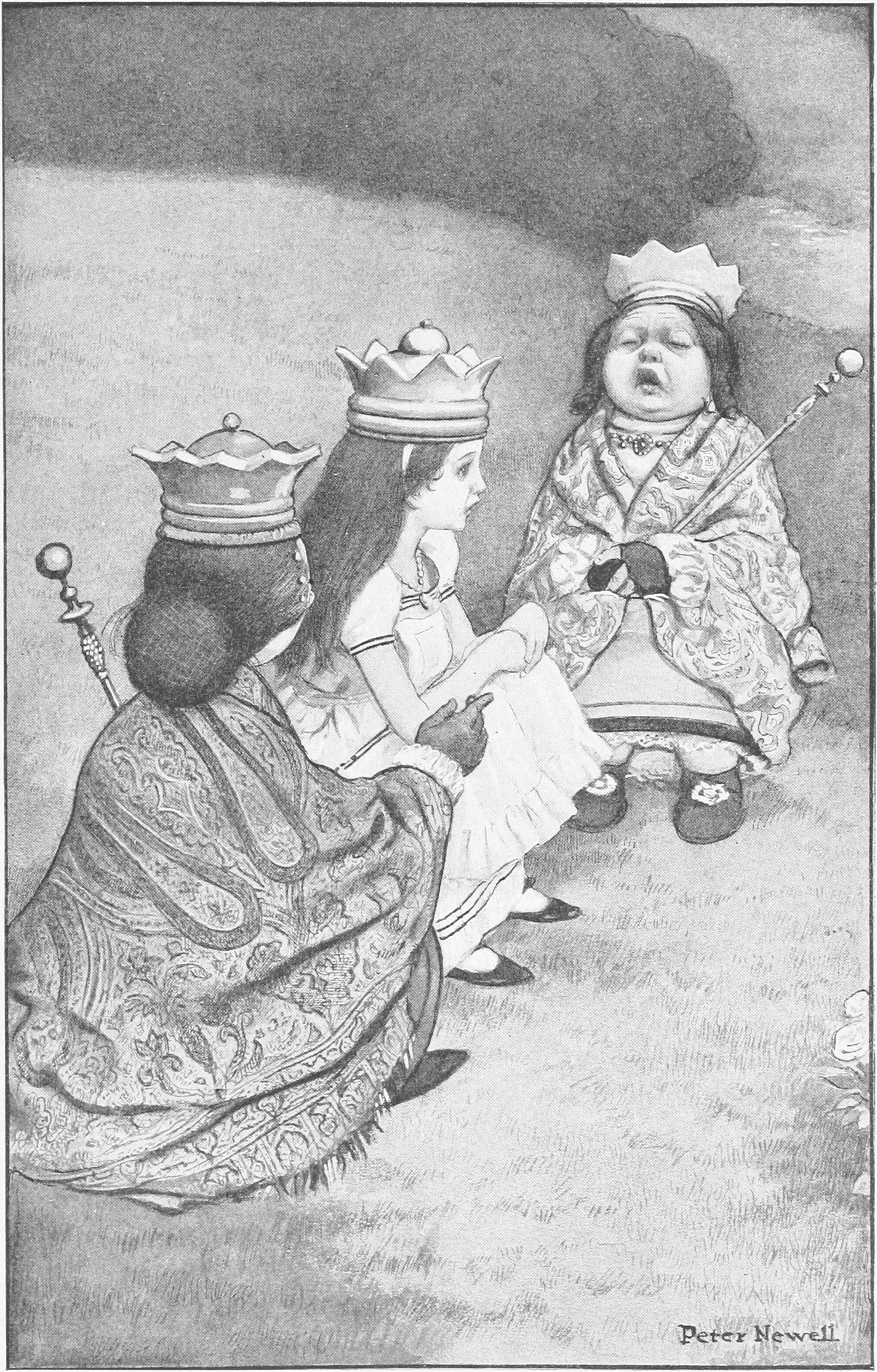
'The rule is, jam tomorrow and jam yesterday--but never jam to-day.
'
'It MUST come sometimes to "jam to-day,"' Alice objected.

'No, it can't,' said the Queen. 'It's jam every OTHER day: to-day isn't any OTHER day, you know.
'
'I don't understand you,' said Alice. 'It's dreadfully confusing!'
'
‘That's the effect of living backwards,' the Queen said kindly: 'it always makes one a little giddy at first—
'
'Living backwards!' Alice repeated in great astonishment. 'I never heard of such a thing!'
'
--but there's one great advantage in it, that one's memory works both ways.
'
'I'm sure MINE only works one way,' Alice remarked. 'I can't remember things before they happen.
'
'It's a poor sort of memory that only works backwards,' the Queen remarked.

                                                                                          Lewis Carrol, Through The Looking Glass